




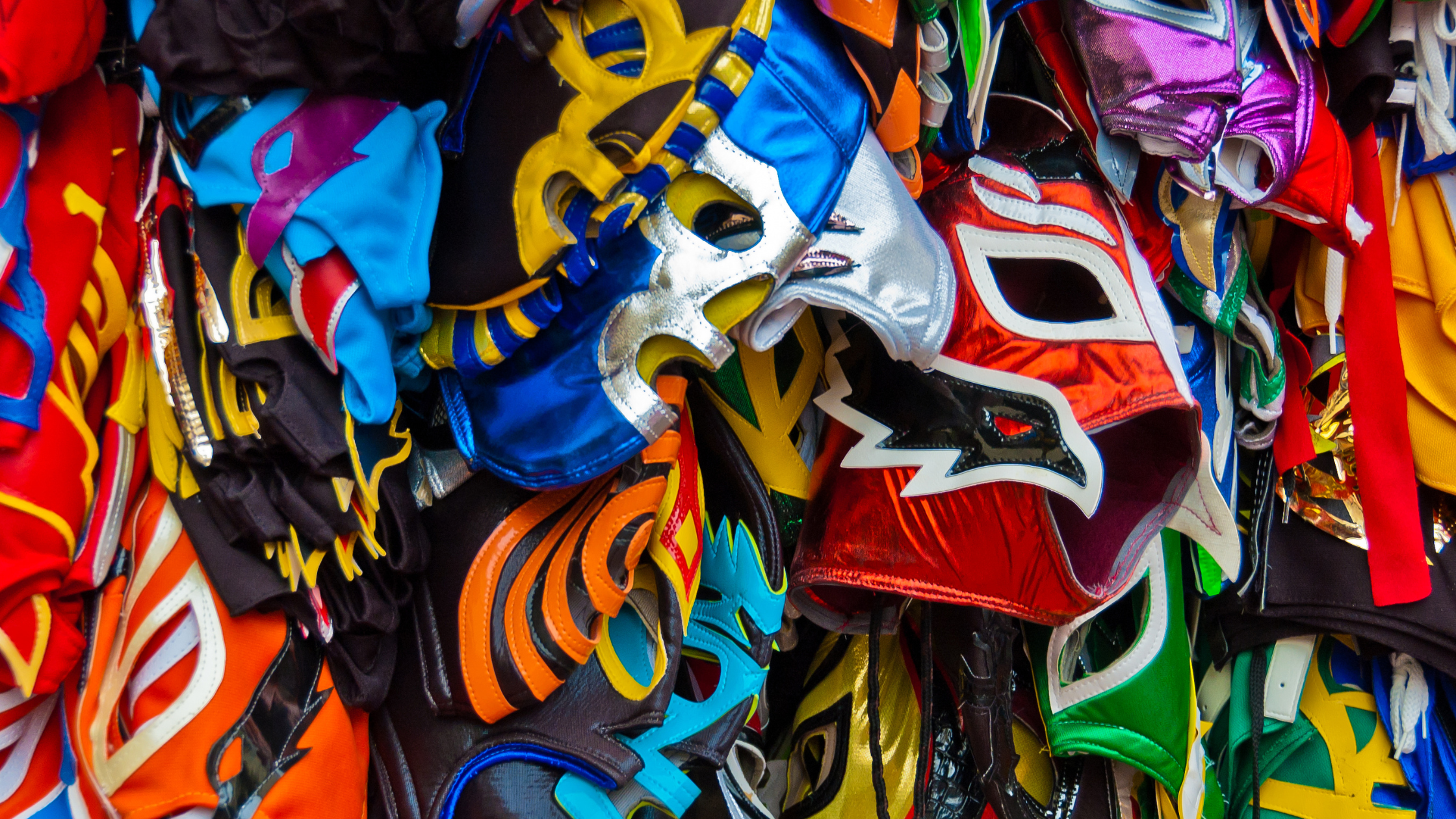
Why Lucha Libre Is More Than Wrestling
For many people outside Mexico, lucha libre is understood at a surface level: colorful masks, dramatic entrances, exaggerated rivalries. Entertaining, theatrical, fun.
But within Mexico, lucha libre has never been just a spectacle. It is a language. A ritual. A mirror of social values, identity, and resistance that has evolved alongside the country itself. To understand lucha libre is to understand why it continues to appear in art, fashion, film, and everyday life long after the match is over.
A Sport Born From The People
Lucha libre emerged in the early twentieth century as a form of popular entertainment, but it quickly took on a deeper role. Unlike elite sports tied to exclusivity or wealth, lucha libre was accessible. Tickets were affordable. Arenas were communal. Heroes were not distant figures, but reflections of the crowd watching them.
Wrestlers embodied archetypes that resonated deeply. The técnico represented honor, discipline, and justice. The rudo stood for rebellion, chaos, and defiance. These characters were not abstract. They mirrored real tensions within Mexican society: order versus resistance, tradition versus disruption. The ring became a stage where those tensions could be played out safely, visibly, and collectively.
The Mask As Identity, Not Disguise
No symbol is more closely associated with lucha libre than the mask. And no symbol is more misunderstood.
In many cultures, a mask hides. In lucha libre, it reveals. The mask represents an ideal rather than an individual. It allows a wrestler to become something larger than themselves: a myth, a value, a symbol. Once worn, the mask carries weight. Losing it is not just defeat; it is the surrender of an identity that may have taken decades to build.
This idea of identity through symbolism is why lucha libre masks appear far beyond wrestling arenas. They show up in murals, sculptures, fashion, and contemporary art because they communicate something universal: transformation, anonymity, strength, and purpose.
Blue Demon & The Weight Of The Mask
Among the many figures that shaped lucha libre, Blue Demon stands apart for how seriously he treated the mask.
For him, the mask was not a performance tool. It was a permanent identity. He appeared in public almost exclusively masked, refusing to separate the character from daily life. In doing so, he transformed the mask from costume into commitment.
In lucha libre, losing a mask represents the ultimate exposure. Blue Demon’s refusal to remove his elevated its meaning. The mask became a lifelong responsibility, not a role that could be put on and taken off.
This is why his image endures beyond the ring. Appearing in murals, film, and contemporary art, Blue Demon’s mask communicates discipline, strength, and constancy without explanation. His legacy reinforces a core truth of lucha libre culture: the mask does not hide who you are. It demands that you live up to what you represent.

Lucha Libre As Modern Mythology
Mexico has always been rich in myth. Ancient civilizations told stories through gods, animals, and cosmic forces. Lucha libre continues that tradition in a modern form.
Wrestlers become legends not through perfection, but through persistence. Through loyalty to a character. Through sacrifice. Fans do not just remember victories; they remember eras, feuds, betrayals, and redemptions. The stories are passed down, debated, and reinterpreted across generations.
This is why figures like Blue Demon, El Santo, and Mil Máscaras transcend sport. They are part of cultural memory. Their imagery carries meaning even for people who have never attended a match.
Why lucha libre keeps inspiring artists?
Artists are drawn to lucha libre because it sits at the intersection of visual power and emotional depth. The colors are bold. The shapes are striking. But beneath that is narrative.
Lucha libre speaks about class, masculinity, community, morality, and resilience. It is theatrical, yes, but it is never empty. That is why it appears so often in Mexican contemporary art, photography, film, and design. The imagery is instantly recognizable, yet endlessly interpretable. Each mask, each persona, becomes a canvas for storytelling.
Blue Demon X ¡AyGüey! Collaboration
When cultural symbols carry this much history, the question is no longer how striking they look, but how they are treated once they move beyond their original context.
Lucha libre endures because it has resisted being reduced to a trend. Its symbols still carry weight, recognized for what they represent rather than how they are styled. When creators engage with this world thoughtfully, the work feels grounded. When they do not, it quickly feels hollow.
At ¡AyGüey!, the approach is to engage with Mexican culture as lived experience, not surface reference. The intention is not to reinvent these symbols, but to allow them to exist in contemporary forms without losing meaning.
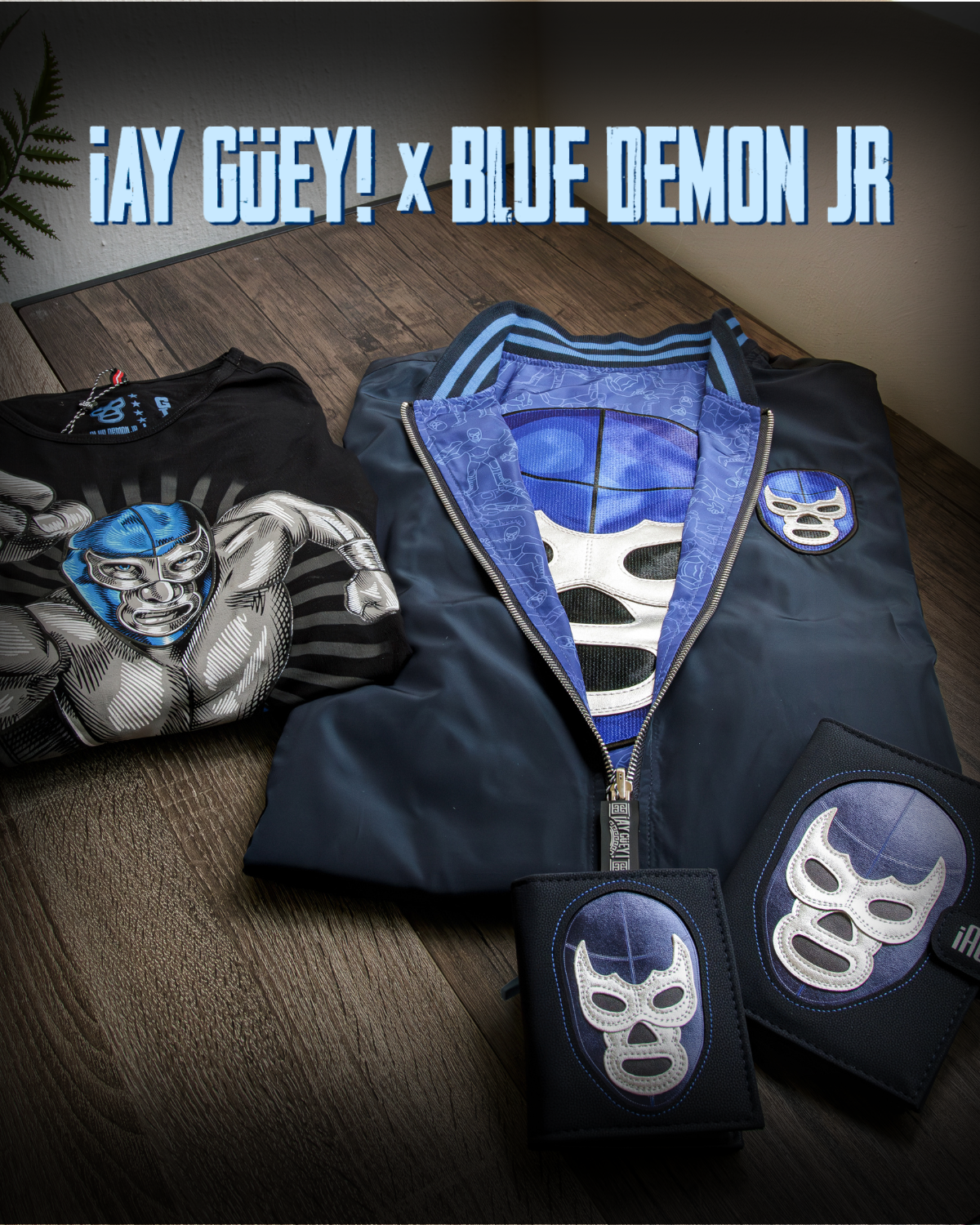
This philosophy is reflected in our Blue Demon collection, which explores the visual language of one of lucha libre’s most enduring figures through considered design and craftsmanship. Rather than treating the mask as an aesthetic shortcut, the collection focuses on symbolism, restraint, and detail, translating legacy into wearable form. Lucha libre reminds us that identity does not need simplification to be shared. It needs respect, context, and the space to remain complex.
Leer más
From Mexico to international cultural stages, Menchaca Studio has helped bring Wixárika art into new contexts without losing its depth. A closer look at how this work travels, resonates, and contin...
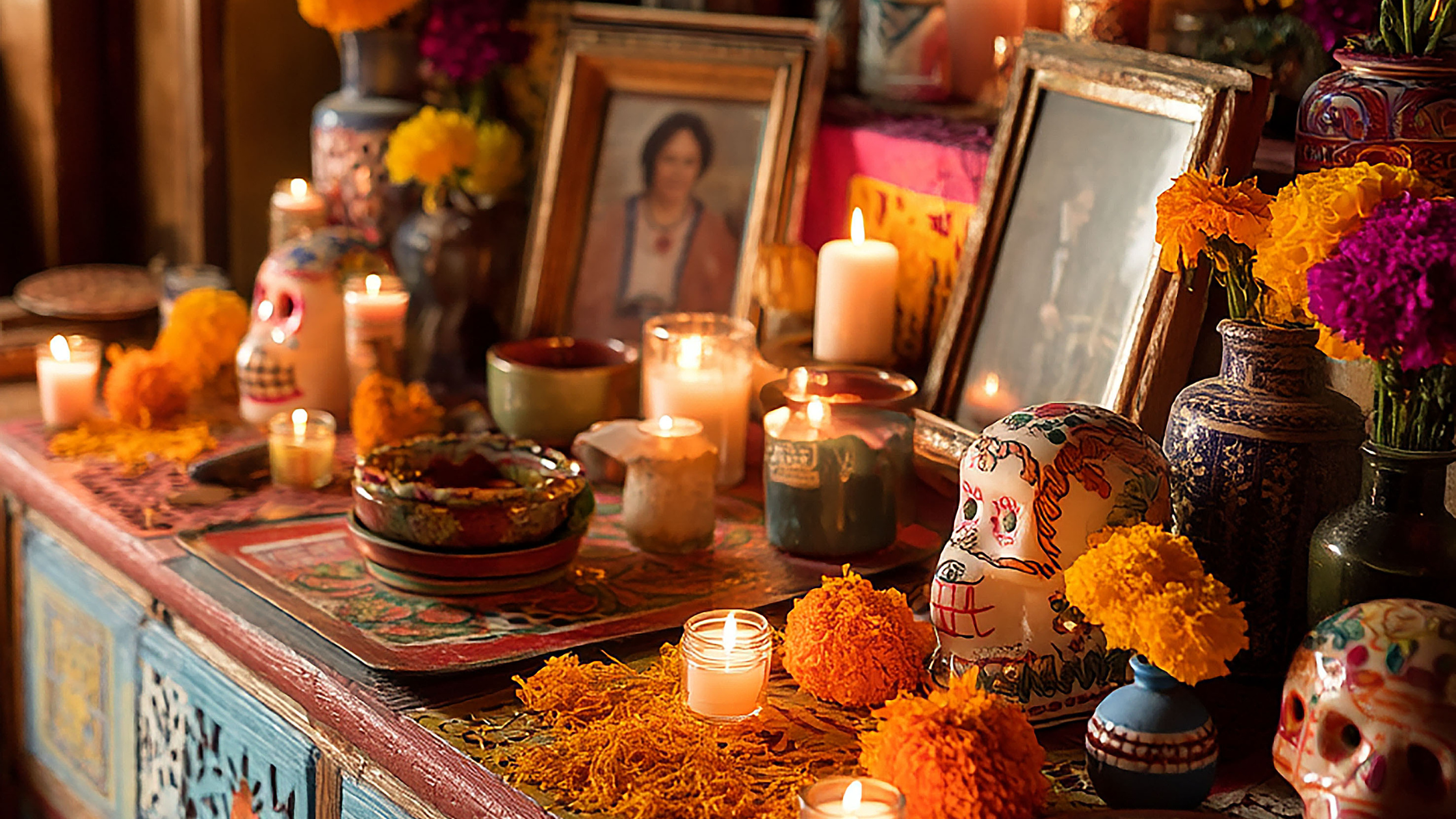
Calaveras are often seen as decoration, but in Mexican culture they are a language of memory, celebration, and continuity. This piece explores the meaning behind sugar skulls and how their symbolis...


